
School Age Cutoff Date: 8 Essential Facts Parents Miss
Table of Contents ▼
Navigating the education system can be incredibly stressful for parents, especially when trying to determine exactly when a child is eligible to start kindergarten. The single most important factor in this equation is the school age cutoff. (You can read more about age requirements on NCES).
What is a School Age Cutoff?
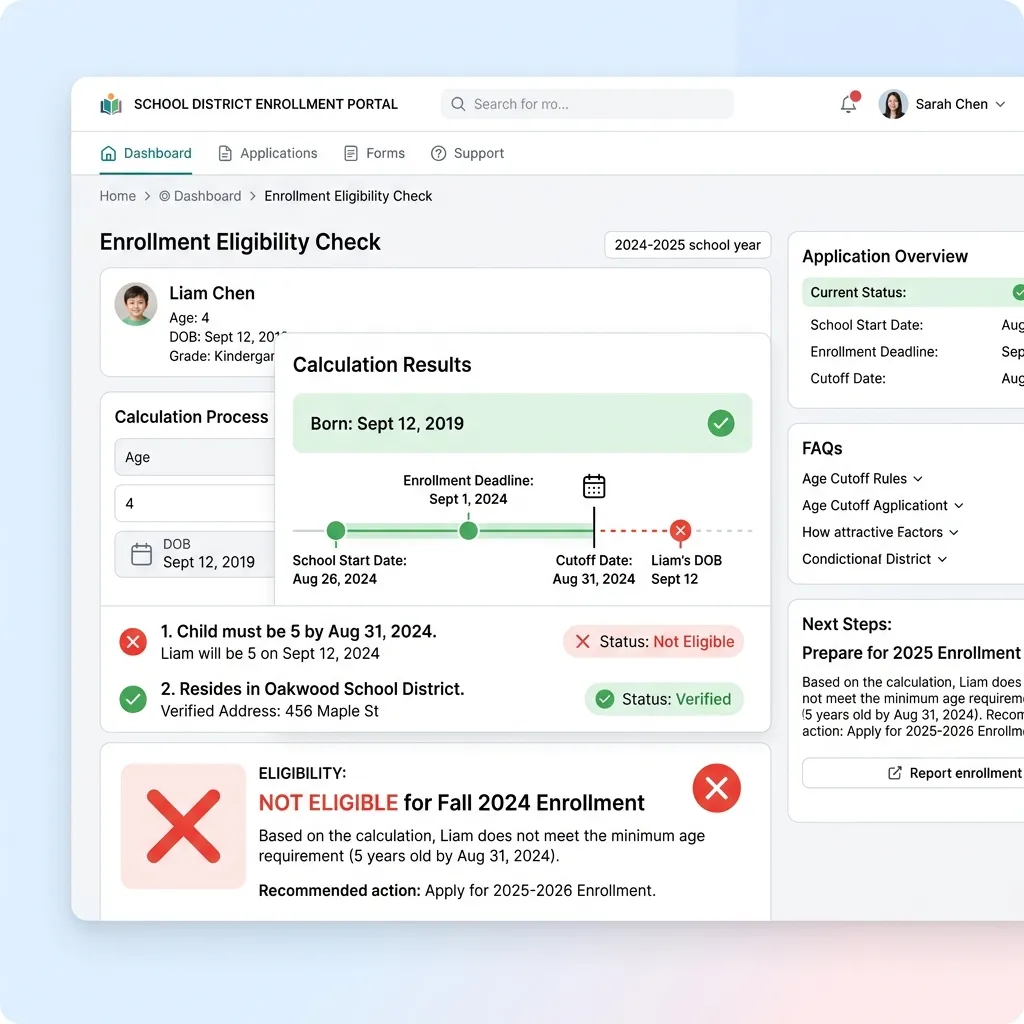
A school age cutoff is a specific date set by a state or local school district that dictates the minimum age a child must be to enroll in a particular grade level (usually kindergarten). For example, a very common cutoff rule is that a child must turn five years old on or before September 1st of the enrollment year. If a child’s birthday is September 2nd, they will typically have to wait an entire year before they can start kindergarten.

Why Do School Age Cutoffs Exist?
These dates are not chosen arbitrarily. School districts establish these cutoffs to ensure a baseline level of developmental readiness among incoming students. Kindergarten requires significant social, emotional, and cognitive development. By enforcing a strict cutoff date, schools aim to create a cohort of students who are relatively close in age and developmental maturity, making it easier for teachers to deliver a standardized curriculum effectively.
The Redshirting Debate
The strict nature of these cutoff dates has given rise to the practice of “academic redshirting.” This occurs when parents of children with late summer birthdays (e.g., August) intentionally hold their children back a year, even if they technically meet the cutoff requirement. Parents often do this to give their child a physical or emotional advantage, as they will be the oldest and most mature in their class rather than the youngest. While controversial, it highlights how much a single date can impact a child’s educational trajectory.
How to Check Your District’s Rules
Because cutoff dates vary wildly between states (and sometimes even between individual school districts within the same state), it is critical to verify the exact date for your local area. You can use our chronological age calculator to determine your child’s exact age in years, months, and days on any given cutoff date to see if they meet the strict eligibility requirements.
Frequently Asked Questions
Can a school make an exception to the cutoff date?
Some districts offer early admission testing for highly gifted children who miss the cutoff by a few weeks, but these exceptions are generally very rare and strictly regulated.
Does the cutoff date apply to private schools?
Private schools are not bound by state public school regulations and often set their own cutoff dates. They may have more flexible admission policies based on individual assessments.
Run the cutoff date, not “today”
A cutoff is a target date. The child’s age on September 1 can differ from their age on the first day of school and from their age when you filled out the form in the spring. Enter the district’s cutoff as the target on the chronological age calculator. Read years, months, and days. A rule that says “age 5 on or before September 1” is a yes or no against that exact span. Being “almost 5” is not a second category unless the district wrote one.
Children born in the same calendar year can fall on opposite sides of a September line. That is why a birth-year page cannot answer a kindergarten question by itself. It can only tell you the two possible ages for the current year. The month and day decide the cutoff.
This site does not keep a table of every state’s date. Those dates change, and a district can differ from the state line. Use the official page or the enrollment packet for the year you are entering, then calculate. ChronoCalc will not tell you whether a school must grant an exception.
Run the cutoff date, not “how old are they”
Eligibility is chronological age on one named date. A child who is 5 years and 0 months on September 2 is a different case from a child who turns 5 on September 2 when the cutoff is September 1. Whole years hide that. Enter the child’s date of birth and the district’s cutoff date in the chronological age calculator and read years, months, and days. If the rule is “age 5 on or before September 1,” the birthday must fall on or before that date. Being “almost 5” is not a second rule unless the district wrote one.
Birth-year pages on this site cannot answer the cutoff question. Two children born in the same year can sit on opposite sides of a September line. Use the year page only to see the two possible ages, then come back with the month and day. Kindergarten, transitional kindergarten, and first grade can use different dates in the same district. Read the line that matches the grade you are asking about.
Redshirting, when a family waits a year even though the child met the cutoff, is a separate decision. The calculator will show that the child was old enough on the cutoff date. It will not tell you whether waiting is a good idea. That is outside age math. Early-admission testing, where a district allows a younger child in after an evaluation, is also a local policy. Do not treat a blog post as the policy.
If you are comparing two districts, compute the age on each cutoff date separately and write both results down. A child can be eligible in one place and not in another on the same afternoon. The school age cutoff tool on this site is the longer worksheet for that comparison.